a

Induction Annealing & Bright Annealing

General Information

The precision of induction heating makes annealing an ideal technique for heating just the surface. High frequency power sources treat a shallow skin effect with extraordinary precision. Low frequency power sources provide a uniform structure for annealing through harden bar stock.

Bright Annealing

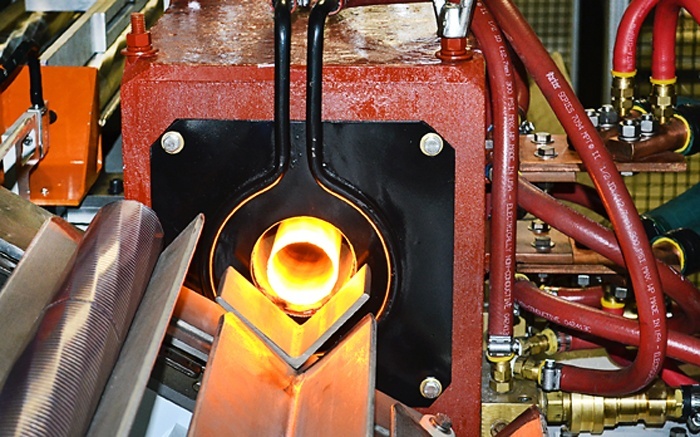
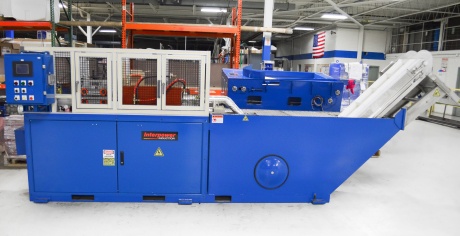
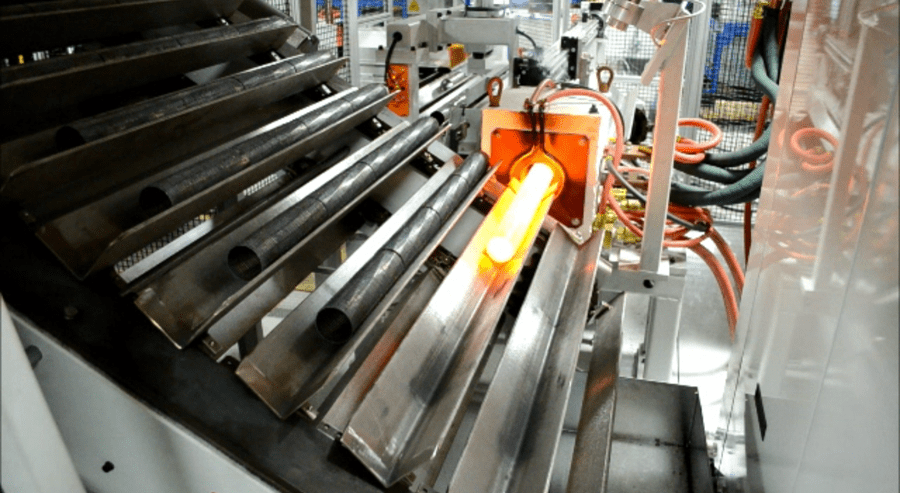
Interpower Induction offers bright annealing which are designed to fit directly in-line with today’s high-speed drawing and welding lines. Utilizing a modular and expandable design, our bright annealing systems meet any line speed, product dimension, or material- supporting a wide variety of metals.

Application Specifications

  • Tube (Aluminum, Copper, Steel, Stainless)
  • Shell Neck & Body (Ammunitions)
  • Threads of Hardened Components
  • Seam Anneal
  • Full-Body Anneal
  • Bar & Wire
  • Automotive Parts
  • Welded Tube
  • Mesh Bending

Learn More About Bright Annealing Machines

To discuss your application and get specifications for a bright annealing machine or induction annealing system, contact our team or request a quote.

Bright Annealing Machines Built for High-Speed Production Lines

When surface finish is critical and oxidation cannot be tolerated, our bright annealing machines give manufacturers the precision and throughput their lines require. Designed to fit directly in-line with high-speed drawing and welding lines, our induction annealing equipment processes material continuously without interrupting production flow.

Unlike batch furnaces that require cooldown periods and significant floor space, our induction-based bright annealing systems heat material in seconds. That speed reduces the window for oxide formation, which is precisely why induction is the preferred method for bright annealing stainless steel tube, wire, and strip.

Modular Bright Annealing Systems That Scale With Your Operation

Our bright annealing systems use a modular, expandable design that can be configured to match your line speed, material dimensions, and target output. Whether you’re processing small-diameter stainless tube or multi-strand wire, our induction annealing equipment accommodates numerous metals and production requirements.

Each system integrates our Zone Control Technology®, which independently regulates power across multiple coil zones within a single converter. That level of control means more consistent heating profiles across the length of each part, reducing the risk of under- or over-processing material in a single pass.

Before your system ships, we fully assemble and load-test it at our facility in Almont, Michigan. That means the induction annealing equipment you receive has already been validated under real operating conditions, so you can put it to work with confidence from day one.

Why Manufacturers Choose Induction for Bright Annealing

Induction heating generates heat within the part itself rather than relying on an external heat source. For bright annealing, that means faster cycle times, tighter temperature control, and the ability to run the process under a controlled atmosphere without complex muffle tube arrangements. Our bright annealing systems work with protective gas environments, preventing surface oxidation and eliminating the need for post-process pickling.

The result is a clean, scale-free finish with the metallurgical properties your downstream process requires. Our systems also integrate with our Sign-Link™ coil signature monitoring to give operators real-time visibility into energy input, current, and process performance across every cycle.

Frequently Asked Questions

What metals can be processed on a bright annealing machine?

Bright annealing is most commonly used for austenitic stainless steels, including grades in the 300 series, as well as certain duplex and ferritic stainless grades. Copper tubing and other nonferrous metals can also be bright annealed using a controlled atmosphere. Interpower’s systems are designed to handle numerous metals; contact us directly to confirm compatibility with your specific material.

What gas atmosphere is used in a bright annealing system?

Hydrogen is the most common protective gas used in bright annealing because it acts as a reducing agent and prevents surface oxidation. Nitrogen or a hydrogen-nitrogen mixture is also used, depending on the material and application requirements. The protective atmosphere is maintained throughout the heating and quench zones to preserve the bright surface finish.

Does Interpower Induction offer testing before committing to a system?

Yes. If you are evaluating induction annealing equipment for a new application or product, we encourage you to reach out to discuss your process requirements. Contact our team to start the conversation.

Questions?

For more information on our annealing and bright annealing processes, please email info@interpowerinduction.com or call (810) 798-9201.